Electropalatography (EPG)
See What Your Tongue Is Doing During Speech
Sometimes children and adults know exactly how a sound should sound, but they simply can't figure out where their tongue needs to go.
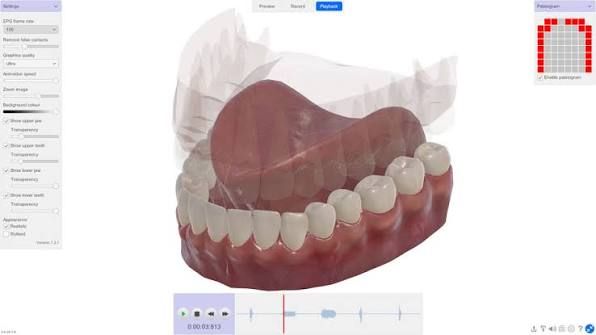
Electropalatography (EPG) is an advanced biofeedback tool that allows us to see tongue-to-palate contact during speech in real time. Instead of relying on verbal instructions like "lift your tongue" or "move it back," EPG provides immediate visual feedback so patients can learn exactly where their tongue should be making contact.
At FAME Speech and Myo, EPG is used as part of individualized speech therapy to help individuals who have not made adequate progress with traditional speech therapy.
What is Electropalatography (EPG)?
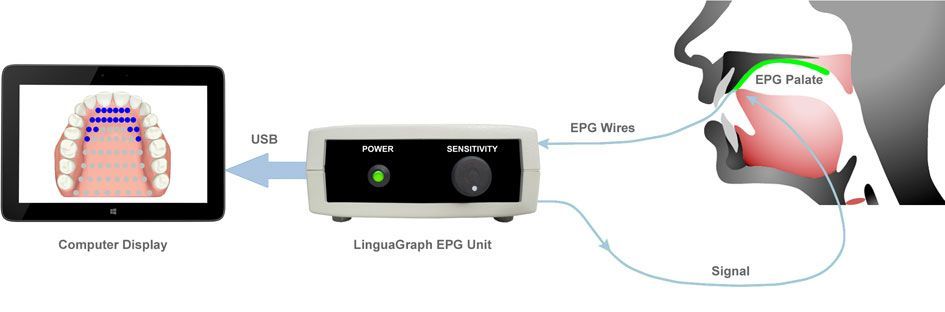
Electropalatography (EPG) uses a custom-made artificial palate that fits comfortably against the roof of the mouth, similar to a clear retainer. Tiny sensors embedded within the palate detect where the tongue makes contact during speech.
As speech sounds are produced, a computer displays the tongue contact pattern in real time.
This allows us to compare a patient's tongue pattern with the expected pattern for a speech sound and make precise adjustments that simply aren't possible with listening alone.
Unlike mirrors or verbal cues, EPG lets us visualize something that normally cannot be seen.
Why EPG?
Many speech sounds depend on extremely precise tongue placement. If a clinician cannot see exactly what the tongue is doing, treatment often involves educated guessing. EPG removes the guesswork.
Benefits include:
- Real-time visual biofeedback
- Objective measurement of tongue placement
- Highly individualized treatment
- Increased awareness of tongue movement
- Useful for individuals who have plateaued in traditional therapy
- Tracks progress over time with objective data
Research has shown that EPG can help establish correct tongue placement more efficiently than perceptual cueing alone for appropriate candidates.
Gibbon FE et al. (1999). Widening Access to Electropalatography for Children with Persistent Sound System Disorders. American Journal of Speech-Language Pathology.
Who is EPG For?
EPG is not necessary for every speech disorder. It is designed for individuals who have persistent speech errors despite receiving quality speech therapy.
Persistent speech articulation disorder, especially individuals with:
- /s/
- /z/
- /sh/
- /ch/
- /j/
- /r/
EPG is particularly useful for individuals with a lateral lisp because it shows exactly how air is escaping and how the tongue is contacting the palate.
Lee A, Gibbon F. (2023). EPG Research and Therapy: Further Developments. Clinical Linguistics & Phonetics.
How Does the Process Work?
Consultation and Evaluation
First, we discuss on the phone whether FAME Speech and Myo is a good fit. Next, we complete an in-depth assessment of speech production, oral function, and tongue movement to determine if EPG is appropriate.
Custom Palate Impression and Manufacturing
If you're a candidate, impressions (or a digital scan) are taken of your upper teeth and palate. These are used to create your custom EPG palate. This process typically takes a few weeks.
Therapy Begins
During therapy, you'll:
- wear your custom palate
- watch your tongue contact on the screen
- compare your productions to target patterns
- practice increasingly complex speech tasks
- learn how to transfer accurate productions into everyday speech
Generalization
As accuracy improves, we gradually reduce dependence on visual feedback and focus on carryover into conversation.
FAME Speech and Myo
What Does Therapy Look Like?
EPG is much more than simply wearing a palate.
Treatment combines:
Motor Learning Principles
Practice techniques that help accurate speech movements become automatic and carry over into everyday conversations.
Evidence-Based Speech Therapy
Treatment guided by current research, clinical expertise, and each patient's individual needs.
Visual Biofeedback
Real-time visual feedback that allows you to see where your tongue is contacting the roof of your mouth during speech.
Auditory Feedback
Listening to and comparing your speech to the target sound to improve accuracy and self-monitoring.
Structured Practice
Step-by-step activities that gradually build speech skills from simple sounds to everyday conversation.
Home Exercises
Personalized practice activities designed to reinforce skills between therapy sessions and promote faster progress.
Get Started Today
If you or your child has been working on the same speech sound for months—or even years—without success, EPG may provide the missing piece. Schedule an evaluation to find out if this advanced technology is the right fit